This year, Diwali festival will be celebrated from the 6th to the 11th of November. Pujya Bapuji has, in His ambrosial satsang-discourses, expounded the following about its worldly and spiritual significance:
From a social perspective, merchants complete their old account books and correct them on Diwali day. On the evening of Dhan Teras, they worship Goddess Lakshmi. During Maharatris (the great nights), repetition of a mantra gives quick success. From a physical perspective, Diwali marks the beginning of winter. To pacify the doshas (bodily humours) of pitta and vaata, the body requires sweets; hence, there is a tradition of eating and sharing them during this festival. This festival indicates strengthening the body.
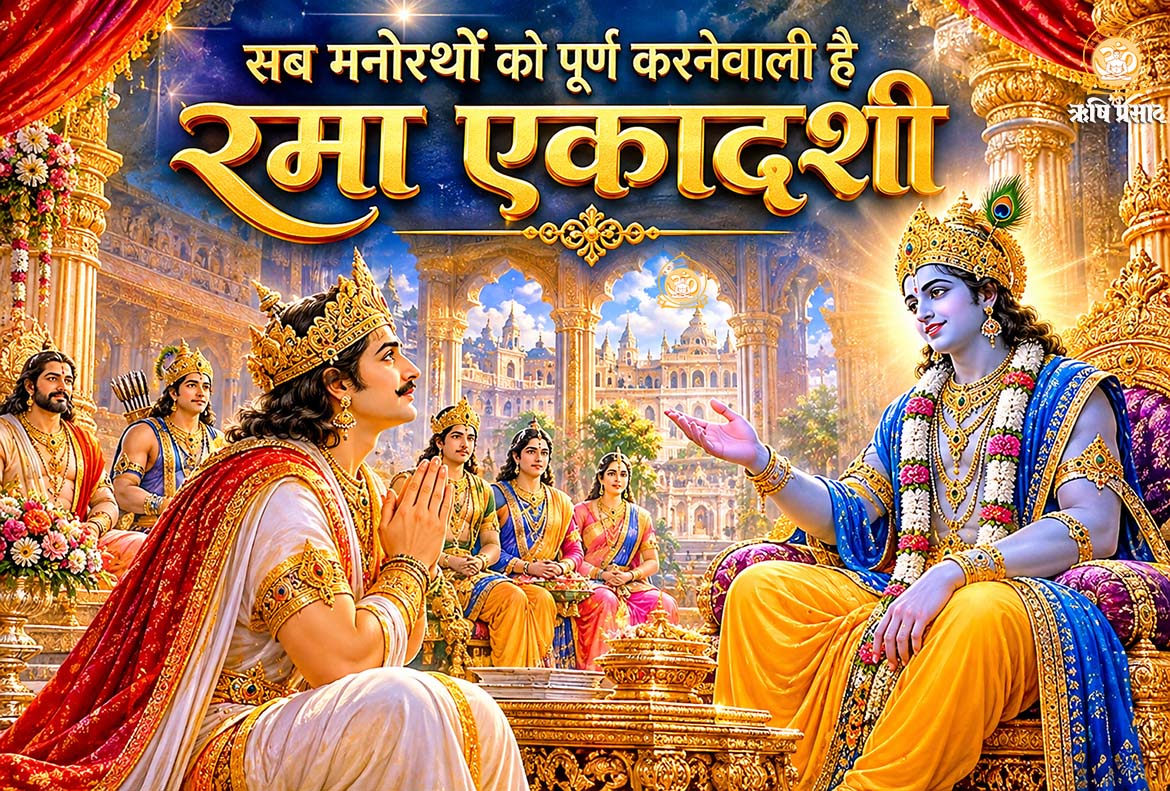
When did Diwali originate? It is said: ‘When Bhagavaan Shri Rama returned to Ayodhya after killing Ravana, the people there cleaned their houses, lanes, streets and courtyards, lit lamps, exchanged sweets, and greeted each other. Since then, Diwali has been celebrated. It has been millions of years since Bhagavaan Shri Rama descended on earth.’ There are various alleged origins attributed to Diwali.
A Cluster of Five Festivals
Diwali is a cluster, or a beautiful bunch of five festivals – DhanTeras, Naraka Chaturdashi, Deepavali, Bali Pratipada, and BhaiDuja.
Dhan Teras: On Dhan Teras, wake up in the morning, meditate on Lord Narayana, and make a resolve: ‘Today, I will worship Goddess Mahalakshmi.’
There is a tradition of worshipping Goddess Lakshmi’s idol or Lakshmi’s coin; people bathe them with panchamrita (a mixture of cow’s milk, curd, ghee, honey and sugar), and pray: ‘O Mother Mahalakshmi! When pleased upon anyone, you give right understanding to them and bless them with the vision of truth-personified Narayana. So, O Mother! Please do dwell in our home, with the grace of Lord Narayana.’
The supremely sacred Mahalaxmi (prosperity, glory, and success) hovers around the sadhaka (spiritual aspirant) who rejoices in Truth-personified Narayana’s bliss. That sadhaka becomes a siddha (an adept, perfected one) – then even the dust of their feet can change one’s destiny. This is the real Diwali from a sadhaka’s perspective. Diwali, as a religious observance, from a worldly perspective, is celebrated once a year (or every 12-months), but Diwali, from a sadhaka’s perspective, can be celebrated every day.
Naraka Chaturdashi: On this night (falling on 19th October this year), the mere repetition of mantras makes a sadhaka attain mantra siddhi which imbibes the powers and goodness of the presiding deity of the specific mantra. This night and that of Deepavali are supposed to be the boon-granting nights for those doing mantra-japa.
On this day one should massage one’s body with oil and have a bath before sunrise. Bathing after sunrise is believed to destroy one’s already acquired religious merit.
On this day, Shri Krishna killed the demon Narakasura and freed 16,000 maidens from the latter’s captivity, granting them His own refuge. Similarly, you surrender the Narakasura in the form of your mind to the refuge of the Self, Krishna (your own true Self) so that it may be destroyed, and thousands of thought-waves or mental modifications governed by the same, may then be governed by Shri Krishna – your own True Self.
Deepavali: As per the Hindu Lunar calendar, there are four festive nights that are supposed to be the Maharatris (the great nights) – Holi, Janmashtami, Deepavali, and Mahashivaratri. These are the auspicious nights that remove misery, poverty, and grief and bestow divine peace and grace. Observing night vigil and doing mantra japa on these nights becomes infinitely fruitful. Those who indulge in sexual intercourse on these nights end up deteriorating their health and reducing their lifespan, and if women happen to conceive on any of these nights, it is very likely that a disabled (or deformed) child will be born.
The following are the four tasks that are done on Diwali:
(1) Sweeping dirt from the house. Cleaning your own house is good, but make sure to clean ‘your home’ as well. Know that the house built of lime and cement is not truly yours, it’s that of your physical body. Your heart is your real home. Remove the dirt of base and negative thoughts, sorrow, grief, and worry from your heart.
(2) Lighting lamps. Besides lighting earthen lamps externally, make sure to light the lamp of Self-knowledge within. That, when experienced in one’s heart is Atma (the Self), and when realized as omnipresent reality, all-pervading Self, is Paramatma (the Supreme Self). That Paramatma is neither far away, nor rare or unattainable nor inaccessible nor separate; instead, That is everyone’s own True Self. Adopting the perspective of jnana (Self-knowledge), awaken in your jnana svarupa, essential nature (Self). Avoid extravagant expenditure and unnecessary action (like excessive talking, sleeping or even staying awake). Abide by the principle of yuktaahaara-vihaarasya… (being moderate in eating and recreation, moderate in sleep, and moderate in exertion during action) and light the Lamp of Self-Knowledge.
(3) Buying new items. People bring new clothes, utensils, gold, silver, etc., into their homes. But if one is ignorant and careless about furnishing one’s true home – i.e., the heart – with new articles (new virtues); then the external, material objects and festivities may bring momentary pleasure, but will also bring the burden of responsibility of protecting and preserving them and you will not be able to celebrate Diwali forever. So, furnish your heart with such things that you don’t need to take the responsibility of protecting them; and your Beloved (God) will easily take its responsibility. Continue to fill your heart with qualities such as viveka (discrimination), vairagya (dispassion), jnana (Self-knowledge), prema (divine love), Aananda (bliss), and others.
(4) Eating and exchanging sweets. Just as you eat and exchange sweets, in the same way, remain joyful and cheerful and spread joy everywhere. Instead of thinking about making your enemy go through tough times, consider offering sweetness to him. Your own mind and heart will remain joyful in the process.
Bali Pratipada – New Year’s Day: On Kartika Shukla Pratipada (the first lunar day of the bright fortnight of the Hindu lunar month of Kartika), also called Bali Pratipada, worship, reflection, meditation, devotional practice, and having Guru-darshan, are supposed to be highly blissful and beneficial for householders. According to the Gujarati Vikram Samvat, Diwali is the last day of the cycle of 365 days in a year, and this Pratipada marks the first day of the New Year. On this day, having darshan of the Vedas, Puranas, cow, Peepal tree, Tulsi (Holy Basil), cowshed, white grains, ghee, copper, white flowers, lamps, etc., is considered to be highly meritorious.
Just as the first thoughts and sights of the morning leave an impact on the entire day of an individual; similarly, the thoughts, sights, and one’s inner state of being on the first day of the year influence the individual for the entire following year.
Feelings of helplessness and downtrodden-ness, misery, and worry are self-destructive. On New Year’s Day, the heart should be filled with enthusiasm and joy. One should meet others lovingly and behold the Beloved (Paramatma – Supreme Self) residing in the hearts of one another. What a happy morning, a wonderful New Year, a divine New Year!
Bhai Duja: On this day, Yami fed her brother Yamaraja (God of death). Pleased with the affectionately served meal, Yamaraja said, “Sister! You may ask for anything, and your wish will be granted.”
Yami replied, “May the brother who eats a meal at his sister’s place on this day, with the sister applying tilaka on his forehead – become three-eyed (opening the third eye of Knowledge) and wise; and get released from the noose of death.”
Pleased with her, Yamaraja blessed, “So be it, sister!”
This festival has done great, noble work of binding Indian brothers and sisters with pure affection. With this, the brother tends to accept the responsibility of his sister’s protection and care (with a noble feeling within); and the tradition of the sister’s auspicious resolve for her brother is carried on. The sister applies tilaka on her brother’s forehead, wishing – ‘May my brother become three-eyed – i.e., may his 3rd eye of right discrimination get opened.’ And when she serves a meal to her brother, the meal also carries the vibrations of her divine love and affection for her brother. There is a vast difference between hotel food or that prepared by machines, and that prepared with affection by loved ones.
The stronger the love, affection, and resolve between brothers and sisters, the greater the nourishment and protection they provide for each other. Additionally, faith, devotion, affection, and good conduct enhance the significance of this bond.
Deepavali is called the queen of festivals, celebrated with joy and fervour for five days. From the perspective of disciples, if one is blessed with the darshan, company and the good fortune of attending satsang-discourse of SatGuru on this day – to awaken one’s inner Light, then it could also be referred to as Mahaparva, Paramatma-parva – the Great Festival, the Divine Festival.